Everybody is a shit designer
Why design is getting overlooked right now, and what designers should claim ownership of next.
I was chatting to a friend last week about what happens when designers are under delivery pressure. The first corner that gets cut is tidying their design files and getting the handoff into good shape. That has consequences further down the line, when engineering picks up those files and has to make a whole bunch of assumptions about things that were never tidied up.
Designers have been doing that for years. You can be a brilliant designer and still be shit at handover, and under pressure almost everyone misses that mark. But the gap between a really good designer and a shit designer is often how much they care about the person picking up the job next, and whether they see the impact on the bigger picture.
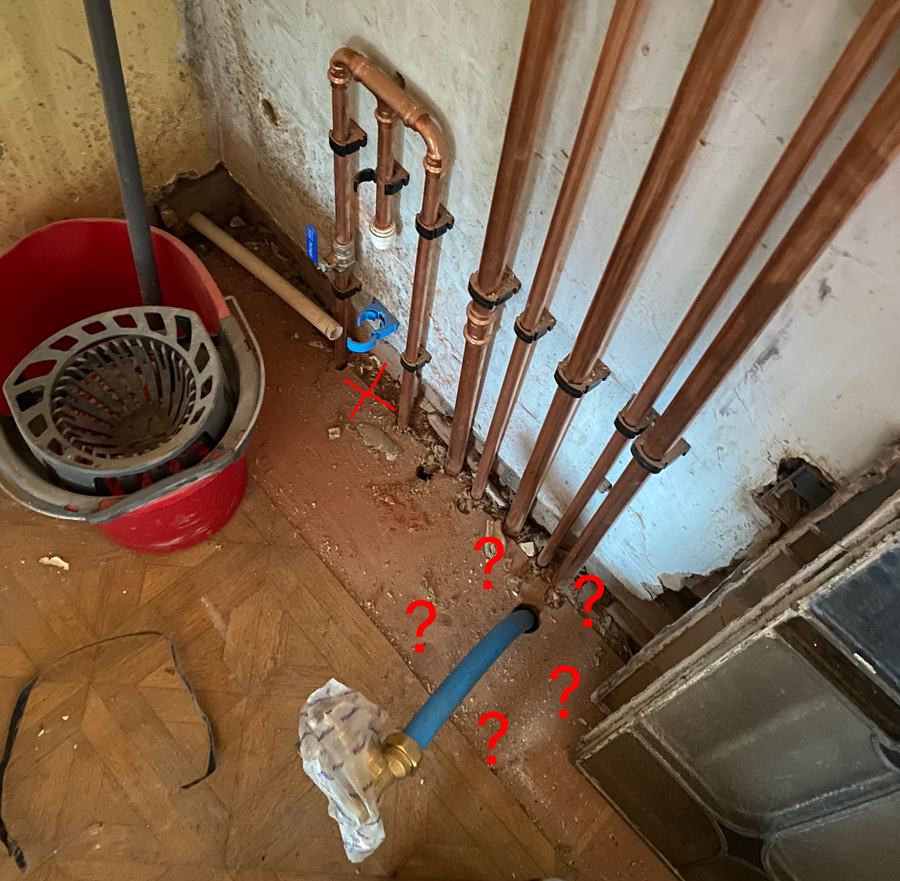
I made the analogy of having your whole house renovated. A good electrician isn’t a plumber, but he knows the plumber is coming in after him. So he takes an interest in how the plumber works and what they’ll need, and he finishes the electrics with that in mind. He leaves the job ready for them to start. A bad electrician does his bit and buggers off, and the plumber spends the first day working around him.
I learnt this the hard way. I ran all the dry plumbing for my house over one weekend and left a single open-ended pipe where the stop tap needed connecting. I thought leaving a blue clip on the wall was more than enough of a clue to show where the new mains needed to come through the floor. I thought it was an immaculate handover. The groundsman who brought in the new mains pipe didn’t notice and brought it up in the middle of the floor. D’oh!
Design is the same. A good designer isn’t an engineer, but they take an interest in how engineers work, so they hand over something the next person can build from without guessing. A shit designer does their bit and moves on.
In the age of AI, handover is becoming a lost skill. If you’re a solo builder, there’s no one to hand over to. If you’re an engineer, you’re not talking to a designer any more. You’re talking to Claude and guessing. Either way, the details, the design system, the continuity and the bigger picture get cut, and nobody realises it’s happening. Everyone is building, nobody is handing over properly, and now everyone is a shit designer.
Building got easy
Dragan Babić wrote Design is a nice-to-have, and I recognised myself in it straight away. He always wanted to make good software but couldn’t program, so he put his effort into design instead. Now he can build things himself, and design feels far less important.
That’s my story too. I always dreamt of building my own software, but there was always an overwhelming amount to learn. Focusing on the craft of design felt more achievable, and it’s worked well for my career.
Now software is incredibly easy to build, and I’m finding the same thing. I spend way less time designing, or even caring about design. I have the eye, and I’ll do round after round until something is right. But when good is good enough, I’m ready to ship and move on, and the tidy-up is the first thing I skip. When I’m building, I’m a shit designer too.
Good enough
I see the same thing at work. Engineering connects to a design file with MCP and ships straight to production. It gets them 80 or 90% of the way there, and to them that’s more than good enough.
Designers notice the gaps. The padding’s off, the icon’s wrong. Closing that last 10 or 20% takes far more effort than the prompts that got us to 80, so it rarely gets done. Nobody is doing anything wrong. They’re just doing their bit and moving on, the same as a shit designer would.
From a pragmatic point of view, I struggle to see the value in that extra effort. Ship it and move on.
Then I think about Apple
Look at a company like Apple sweating the details, and it does make a difference.
It’s about keeping the balance and staying open minded. If you’re thinking pragmatically about a single feature, every paper cut on its own isn’t worth fixing. The padding, the icon, the button that’s slightly different on the next screen. Step back and look at the bigger picture, and it becomes much more about the details. They pile up across every team and every release, and the customer feels all of them at once. Nobody chose a worse experience. It just added up that way.
When everyone is a shit designer, we need a little less pragmatism and more people owning coherence.
Coherence
Peter Merholz’s Design Owns Coherence put words to something I’ve felt for a long time.
Finance owns capital allocation. Legal owns risk. Marketing owns demand. Sales owns revenue. Engineering owns reliability.
Design usually owns consistency, usability and accessibility. They matter, but to a business they’re small potatoes. Peter argues design should own coherence: how a suite of products, across every channel, adds up for the person on the other end.
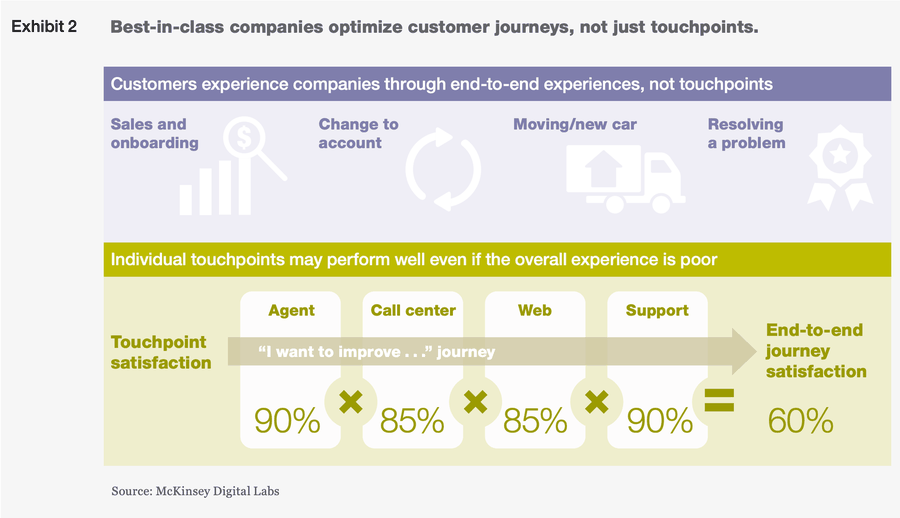
He quotes a McKinsey case study where four touchpoints scoring 90, 85, 85 and 90% add up to a 60% end-to-end experience. Every team hits its numbers and the customer still has a bad time. That’s what happens when every handoff is 80% good enough. When everyone is a shit designer, nobody owns how it all adds up.
Why nobody notices
Product teams are built vertically. Each one ships its own thing against its own metrics. Design is one of the few disciplines that naturally works across the whole journey.
But coherence has no decision moment. Finance can stop spend. Engineering says when something is ready to ship, and engineering is more than happy with 80% being right.
So how do we get leaders to truly believe in it? Peter doesn’t have the answer, and I don’t think anyone does yet. What I do know is that arguing for it from the side isn’t working.
Where designers go next
Lean into the codebase. Designers can add a tonne of value as the ones fixing the bugs and paper cuts left behind by everyone else churning through. Engineers ship the 80%. Designers come along, own the end-to-end coherence, and put their effort into the nuts and bolts. Small things that add up to a huge cumulative impact.
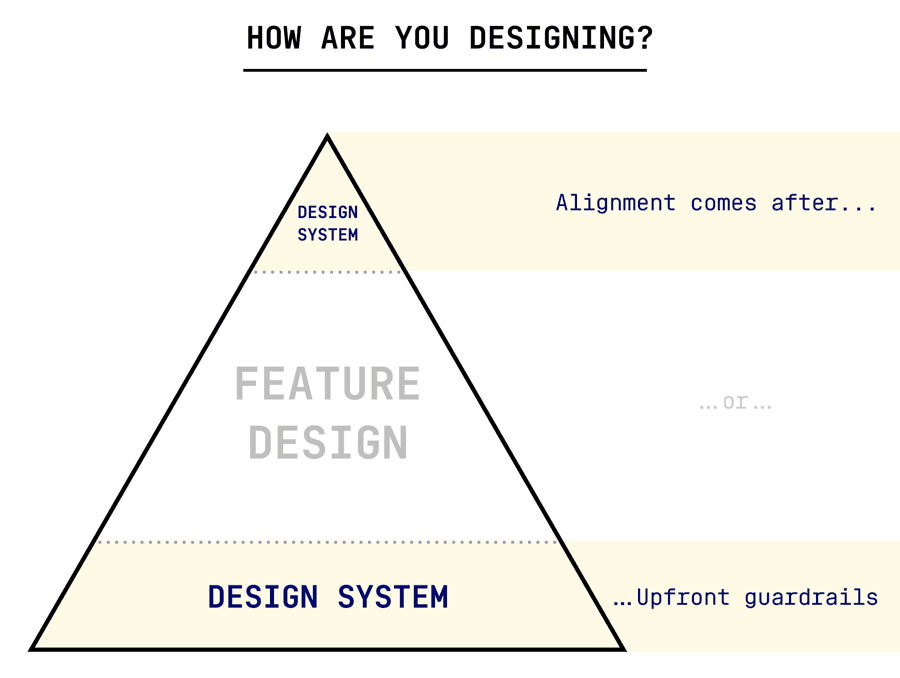
Make sure the design system doesn’t slow anyone down. This is where most of my head is right now. In an agentic world, a design system has to empower the many small, autonomous decisions made every day by anyone making code, whether that’s an engineer, a product manager or another designer. It’s the guardrails and guidance that keep people on track and aligned, so fewer tweaks are needed afterwards. If it’s easy to use, people connect to it instead of skipping it. It’s not just about one or the other. As a foundation, the design system has to provide the guardrails. But feature design is going AWOL with AI doing its own thing, so there needs to be a design review on top as well, to make sure anything new still follows the process. I don’t think people appreciate this.
Own the experience. End-to-end ownership of what the experience looks like, and the long-term strategy for where it’s going. Those are the two things we really need to claim as an industry.
Do it together. None of this is a solo mission. The electrician and the plumber only work well because each understands what the other needs. Designers need to understand how engineers and product managers work, and the people around them need to see what good design brings to the room. That’s how design earns respect, and it’s the difference between a good designer and a shit one.
If we sit to the side and just support feature releases, we’re never going to have the business impact we rightly deserve. We’ll probably be the first to get cut, because we’re not adding value and other people can do that job themselves now.
References
- Dragan Babić, Design is a nice-to-have, 2 October 2026
- Peter Merholz, Design Owns Coherence, 14 September 2026
- McKinsey, From touchpoints to journeys, McKinsey Quarterly, 2016